
Last updated November 21, 2026
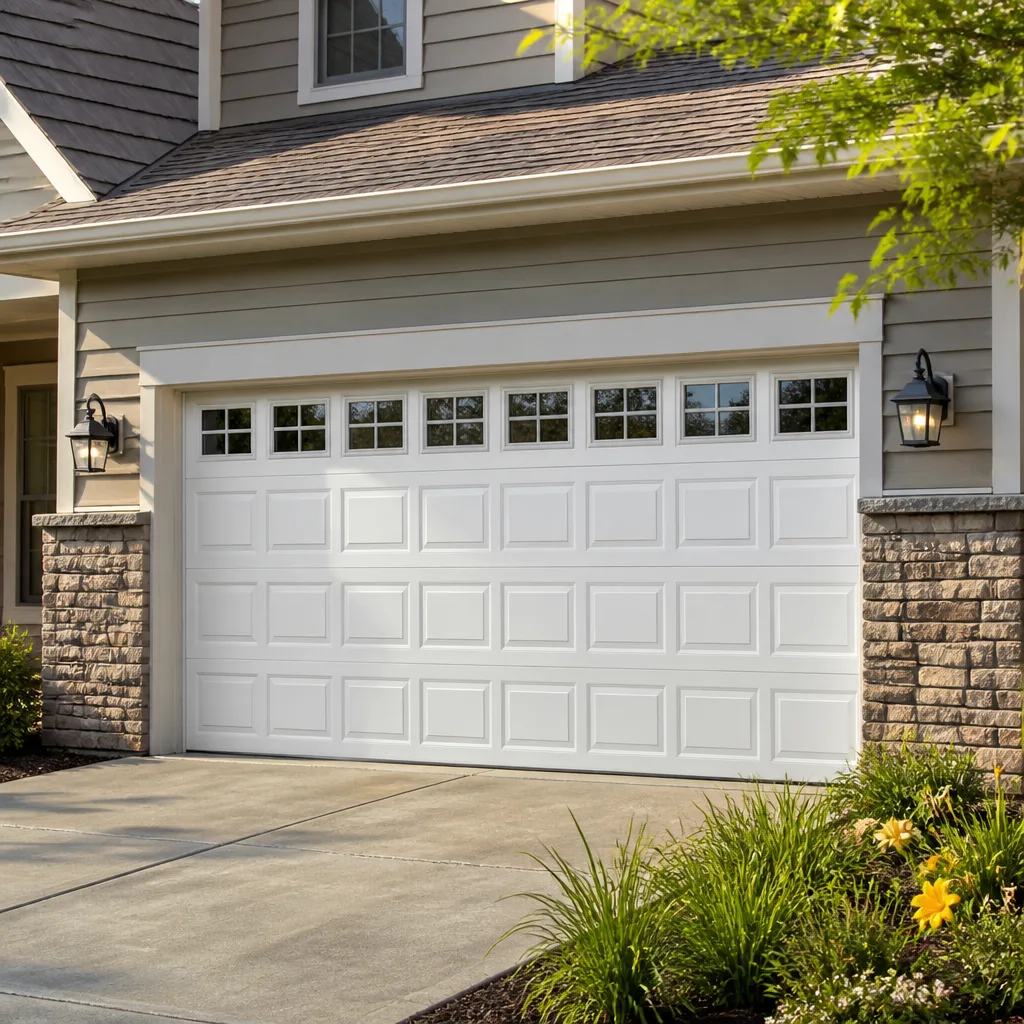 Raised-panel steel
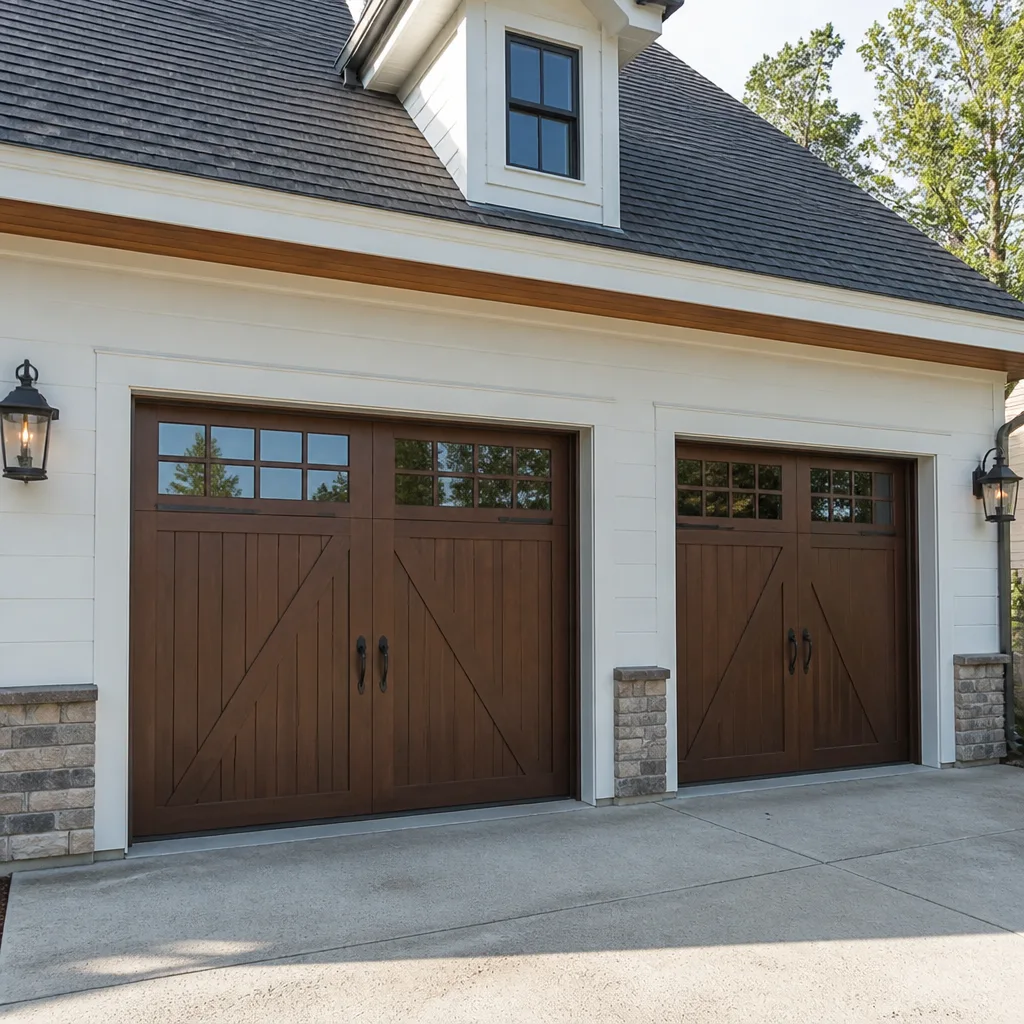 Carriage house
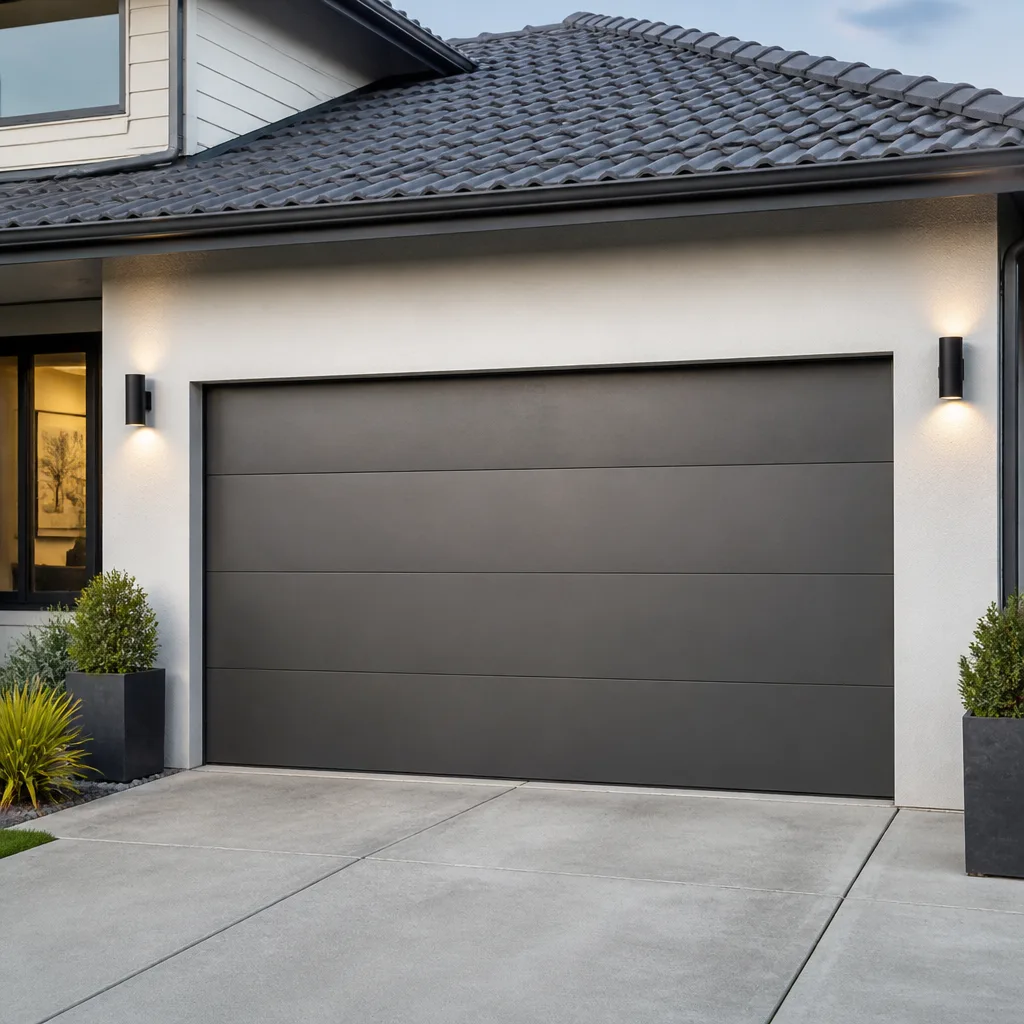 Modern flush
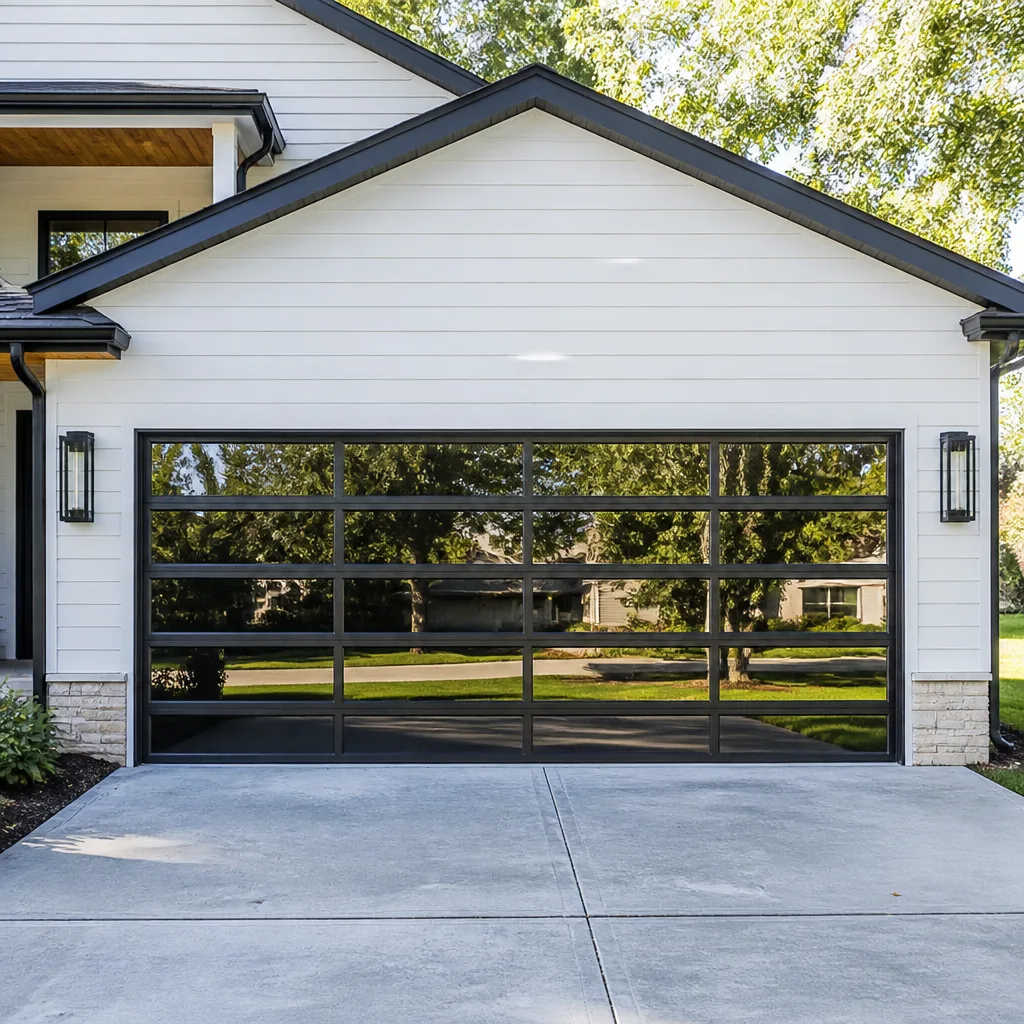 Full-view glass
 LiftMaster openers
 Chamberlain openers
Full 25-point door and opener safety check with every visit - springs, cables, rollers, tracks, and your LiftMaster or Chamberlain opener included
You get a price before we start. It does not change when the pro arrives.
Get your free estimateGarage Door Repair Maintenance Checklist for Wayne Homeowners
Most garage door maintenance checklists tell you to “lubricate the springs.” That single line has sent more homeowners to the emergency room than almost any other advice in home maintenance. Torsion spring tension is calibrated to the exact weight of your door, and the adjustment hardware on a loaded spring can release hundreds of foot-pounds of force instantly when it’s touched by someone who doesn’t know what they’re doing. So this guide draws a hard line. Some tasks belong to you. Others belong to a technician, and the line isn’t arbitrary – it’s mechanical. Below you’ll find a full checklist for Wayne homeowners, split cleanly by who should do what, with the reasoning behind every boundary.
Quick Answer
A safe garage door maintenance routine in Wayne means lubricating the rollers, hinges, and tracks, testing the balance and auto-reverse, and inspecting the bottom seal – tasks you can do yourself. Springs, cables, torsion hardware, and any work on the opener’s internal electronics belong to a trained technician. Most homeowners need a light check every six months and a professional inspection once a year, with extra seal attention in spring after Wayne’s freeze-thaw winter.
Styles & brands we work with
- Raised-panel steel
- Carriage house
- Modern flush
- Full-view glass
- LiftMaster openers
- Chamberlain openers
Table of Contents
- Owner-Safe Tasks vs. Technician Tasks
- How to Lubricate Your Door Correctly
- Testing Balance and Auto-Reverse
- Bottom Seals and Weatherstripping in Wayne’s Climate
- Annual vs. Semi-Annual Task Timeline
- Springs and Cables: Why We Draw the Line Here
- Opener Maintenance You Can Do
- When to Call a Professional
Owner-Safe Tasks vs. Technician Tasks: Where the Line Falls
The core question of any maintenance checklist is simple: what happens if you get this wrong? If the answer is “the door squeaks a little” or “you have to re-test it,” the task is yours. If the answer is “a loaded spring releases stored energy into whatever is nearby,” the task is not. That’s the whole principle. Everything in this guide follows from it.
We see the same pattern across Wayne homes. Homeowners who do the safe tasks on schedule get years of quiet, reliable service out of their doors. Homeowners who ignore the safe tasks because the dangerous ones feel too intimidating end up calling us for repairs that a fifteen-minute check would have prevented. So here’s the split, in plain terms.
Owner-safe tasks
- Visual inspection of tracks, rollers, hinges, and panels
- Lubricating rollers, hinges, and the torsion bar bearing plate (the metal, not the spring itself)
- Testing the balance of the door by hand with the opener disengaged
- Testing the auto-reverse safety feature with a solid object
- Cleaning the photo-eye lenses below the door
- Inspecting and cleaning the bottom seal and side weatherstripping
- Wiping the exterior panels and checking for rust spots
Technician tasks
- Any adjustment or replacement of torsion or extension springs
- Any work on the lifting cables
- Adjusting cable drums or the torsion bar itself
- Repairing a bent or misaligned track section
- Diagnosing opener circuit board, motor, or logic failures
- Replacing hinges that support the door’s structural load
The mechanical reason for the boundary is stored energy. A torsion spring on a standard double door holds enough tension to launch a person across a garage if it fails under load. A cable that snaps does so at speed. These aren’t repairs you “have a go at” – they’re tasks with a real injury record, and we handle them with the right tools and door-blocking practices every time. If you want to understand what spring work actually involves, our garage door spring repair page walks through it without giving anyone a reason to try it at home.
How to Lubricate Your Door Correctly (and What Not to Use)
The right lubricant for a garage door in Wayne is a white lithium grease or a silicone-based spray – not WD-40. WD-40 is a solvent, not a lubricant, and it strips the existing grease off your moving parts and leaves them drier than they started. In our experience, that’s the single most common lubrication mistake we see on doors around town.
Wayne’s climate adds a wrinkle most national checklists miss. The area runs humid summers and cold winters with regular freeze-thaw cycles, so the metal on your door expands and contracts more than it would in a stable climate. That movement works lubricant out of the joints faster, and it also means you should be a bit more generous with the product than a Phoenix homeowner would be.
The right way to lubricate, step by step:
- Close the door fully and disconnect the opener using the release cord.
- Spray white lithium grease or silicone lube on each roller’s bearing surface – not the wheel face.
- Apply a small amount to each hinge pivot point along both sides of the door.
- Lubricate the torsion bar bearing plate at the center of the door header – just the metal bracket, never the spring coil.
- Wipe off any excess with a rag. Excess product attracts dirt, and dirt is what wears rollers out.
- Reconnect the opener, run the door up and down twice, and listen for the change in pitch.
Do this every six months. Some brands – Clopay and Amarr in particular – use nylon rollers on certain models that need much less product than steel versions; if you’re not sure which you have, a light coat is always safe. We service doors from all eight major brands, including Clopay, Amarr, Wayne Dalton, and Craftsman, so if you’re unsure of your roller type, ask us when we’re out for an annual inspection.
Testing Balance and Auto-Reverse Without Touching Spring Hardware
You can confirm your door is mechanically sound in about three minutes, and none of it requires going near a spring. The balance test tells you whether the springs are doing their share of the lifting. The auto-reverse test confirms the safety system will stop the door if something gets in the way. Both are owner tasks, both are essential, and both catch problems early enough to avoid a bigger repair.
How to test balance:
- Close the door, then pull the opener release cord so the door is in manual mode.
- Lift the door by hand to about halfway and let go.
- The door should stay roughly in place, maybe drifting a few inches. If it slams down or flies up, the spring tension is off.
- Open and close the door by hand a few times. It should move smoothly with moderate effort – a firm push, not a struggle, and not so light you worry it will fall.
How to test auto-reverse:
- Re-engage the opener and run the door about two thirds closed using the wall button.
- Place a solid object – a piece of wood or the manufacturer’s test block – on the ground where the door will reach it.
- Press the button again and let the door close.
- When the door meets the object, it should reverse within about two inches. If it stops or pushes down on the object, the system needs attention.
Out-of-balance doors put stress on the opener motor, the rollers, and the hinges. In Wayne, doors that fail balance tests usually need a spring adjustment rather than a spring replacement – but only a technician can tell you which. That distinction is worth a call. The same fixed-fee estimate covers the inspection whether the answer turns out to be a small adjustment or a spring replacement, so you’re not paying to find out.
Bottom Seals and Weatherstripping in Wayne’s Climate
The bottom seal is the first part of your garage door to fail in Wayne, and it fails faster here than in most places because of freeze-thaw ground movement. Water gets into the concrete under the seal, freezes overnight, and expands. Over a few winters, the ground under the seal heaves slightly, and the seal gets compressed, cracked, or torn away from the aluminum retainer. Once that happens, your garage is a wind tunnel in winter and a humid box in summer.
Check the seal twice a year. Run your fingers along the bottom edge – you’re looking for three things:
- Cracks or tears: even small cracks grow fast in freezing weather.
- Hardness: a healthy seal flexes. If it’s brittle or stiff, it’s past its useful life.
- Gaps against the floor: with the door closed, look for daylight coming through. If you can see light under the door, water and cold air will follow.
Side and top weatherstripping fail for different reasons. Sun exposure hardens the rubber, and Wayne’s temperature swings pull the nails loose from the frame as the wood moves. Walk the full perimeter of your door frame with a screwdriver and press on any loose stops. If they wobble, re-nail them before the winter, because a loose stop is what lets snow blow in and tears up the sides of the door panel.
Bottom seals are a genuine owner task – they’re under $30 in most cases and pop off and on with a screwdriver. Side weatherstripping is also manageable if it’s nailed to wood framing. But if your door has a metal frame or a press-fit retainer you’ve never worked with, don’t force it. Panel damage is expensive and weatherstripping is not.
Annual vs. Semi-Annual Task Timeline for Wayne Homeowners
The hardest part of any checklist is knowing when to do what. “Check periodically” is not a schedule. Here’s a specific one that reflects how garage doors actually age in Wayne’s climate, with the specific jobs that need doing every six months and the ones that only need doing once a year.
Every six months (spring and fall)
- Lubricate rollers, hinges, and the bearing plate
- Test balance with the opener disengaged
- Test auto-reverse with a solid object
- Inspect and clean the bottom seal
- Walk the door frame for loose weatherstripping
- Wipe the photo-eye lenses with a damp cloth
- Visual check of rollers for flat spots, cracking, or wobble
Once a year
- Full professional inspection, including springs, cables, and opener internals
- Check bottom seal for replacement – before winter, not in the middle of it
- Inspect the torsion bar bearing plate for wear or grease loss
- Check the door panels for rust spots or paint flaking
- Test the manual release cord and re-engagement
- Inspect the door safety sensors with a fresh alignment check
Do the fall check before the first freeze. Doing the seal inspection in October gives you time to replace a worn seal before ice gets under it. Doing the balance and auto-reverse tests in the same visit means you’re testing the door under the temperature conditions it will face all winter, which is when failures show up.
The spring check is a light tap on the shoulder to make sure you’re not missing something. It saves money in the long run because most of the doors we repair in Wayne fail with a spring that was showing wear for months before it finally let go.
Springs and Cables: Why We Draw the Line Here
Torsion springs and lifting cables are the two parts of a garage door that reliably hurt people who work on them without training. Every year, home improvement and emergency departments see injuries from this exact category of repair. We tell Wayne homeowners the same thing every time: this is the one job where a fifteen-minute call to a technician is worth far more than the time and money you’d save by doing it yourself.
Here’s what’s actually happening. A torsion spring on a standard double-car door has to pull the entire weight of the door through a full cycle of travel. That’s a lot of stored energy in a coiled piece of steel wire, and it’s the reason the spring is wound with a specific number of turns that match the door’s exact weight. If you unload it without the right tools, it releases all at once. Cables under tension behave the same way – a cable that fails at the drum snaps with force that can take out a panel, a window, or worse.
What we’re looking for on an inspection isn’t just the obvious snap. We check for:
- Gaps in the spring coil that weren’t there before
- Stretched extension springs that have lost flexibility
- Frayed or kinked cable strands at the drums
- Worn bearing plates making noise or showing grease loss
- Loose suspension hardware or separating springs
A spring that fails at home usually fails at the worst time – a cold morning, with the car inside, and the door in a position that has to be secured before anything can be done. Our technicians handle torsion and extension springs as a core specialty rather than passing the job off, and they’ve been trained to work safely around loaded hardware. If you suspect a spring is on its way out, call (844) 708-3348. We answer 24/7. Same-day response is available for a door that won’t move because a spring has already let go.
Opener Maintenance You Can Do (and the Brand Differences)
Opener maintenance is largely on the owner’s side of the line. The tasks that prevent most opener failures don’t require getting inside the unit. There are four things to check every six months, and they’re all on the outside.
Owner tasks on the opener:
- Test the wall button and any remote or keypad for reliable response
- Wipe the photo-eye lenses with a damp cloth – a small amount of dirt stops the door from closing
- Check the manual release cord and make sure it re-engages cleanly
- Confirm the light comes on when the door cycles, and that there’s no burnt smell from the housing
Technician tasks on the opener:
- Logic board, capacitor, or motor diagnosis
- Force and travel limit adjustments after a spring or cable repair
- Gear and sprocket replacement on chain-drive units
- Any repair inside the housing
- Smart-home integration troubleshooting on newer units
Brand matters here, and it’s a place where a generalist will guess and a specialist won’t. A LiftMaster or Chamberlain opener shares a lot of internal architecture; a Genie or Craftsman is a different animal; Raynor openers and older legacy units have their own quirks. We work across all eight major brands, including LiftMaster, Chamberlain, Genie, and Craftsman, and we diagnose before recommending replacement. If the board is fine and a gear has stripped, you don’t need a new opener – you need a gear. Our garage door opener repair page walks through the brand-specific diagnostics if you want to understand what a proper inspection covers.
Common Mistakes to Avoid
- Using WD-40 as a lubricant. It’s a solvent. It strips existing grease and leaves moving parts drier than before. Use a white lithium grease or silicone spray instead, and skip the spring coil entirely.
- Trying to adjust a torsion spring without the right tools. The spring holds enough energy to cause serious injury. This is the one task on the whole checklist where “I’ll give it a try” is genuinely dangerous.
- Ignoring the bottom seal until winter. Wayne’s freeze-thaw cycles damage seals early. Check it in October, not in January when the cracks have grown into a gap you can see daylight through.
- Assuming a door that opens means the safety system works. The auto-reverse and photo-eye tests are the only way to know the door will stop if a child or pet is underneath it. Test them with a real object, not just by closing the door and walking away.
- Replacing the opener when only a part has failed. Most opener calls are gear, capacitor, or logic board failures on units whose motors are perfectly fine. Get a diagnosis before you buy a new unit – it’s usually a fraction of the cost.
- Skipping the fall balance check. Doors that fail balance in cold weather are the ones that snap springs in January. A two-minute balance test in October tells you whether to schedule the repair on your terms.
- Forcing a door that’s come off track. If the door has jumped the track, calling us instead of running the opener is what keeps a bent panel from becoming a full door replacement.
See the difference
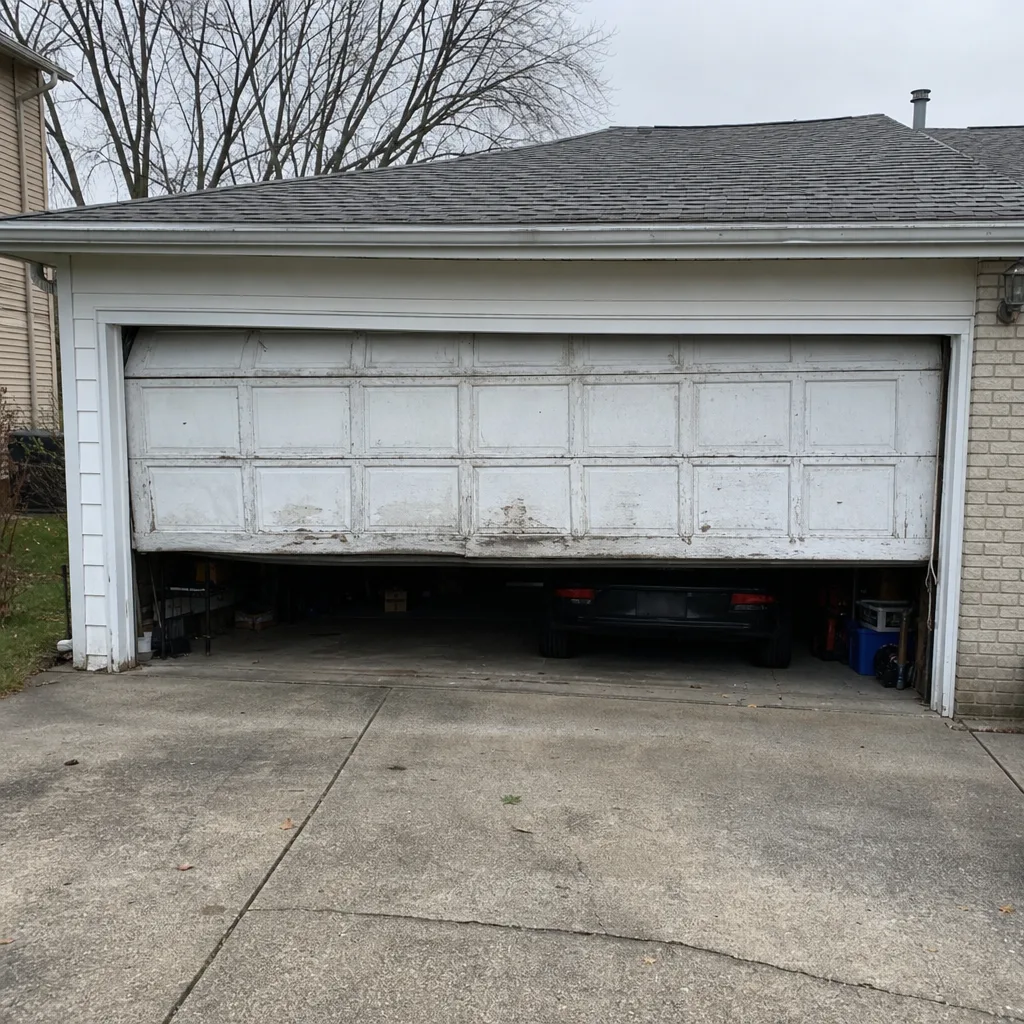 Before
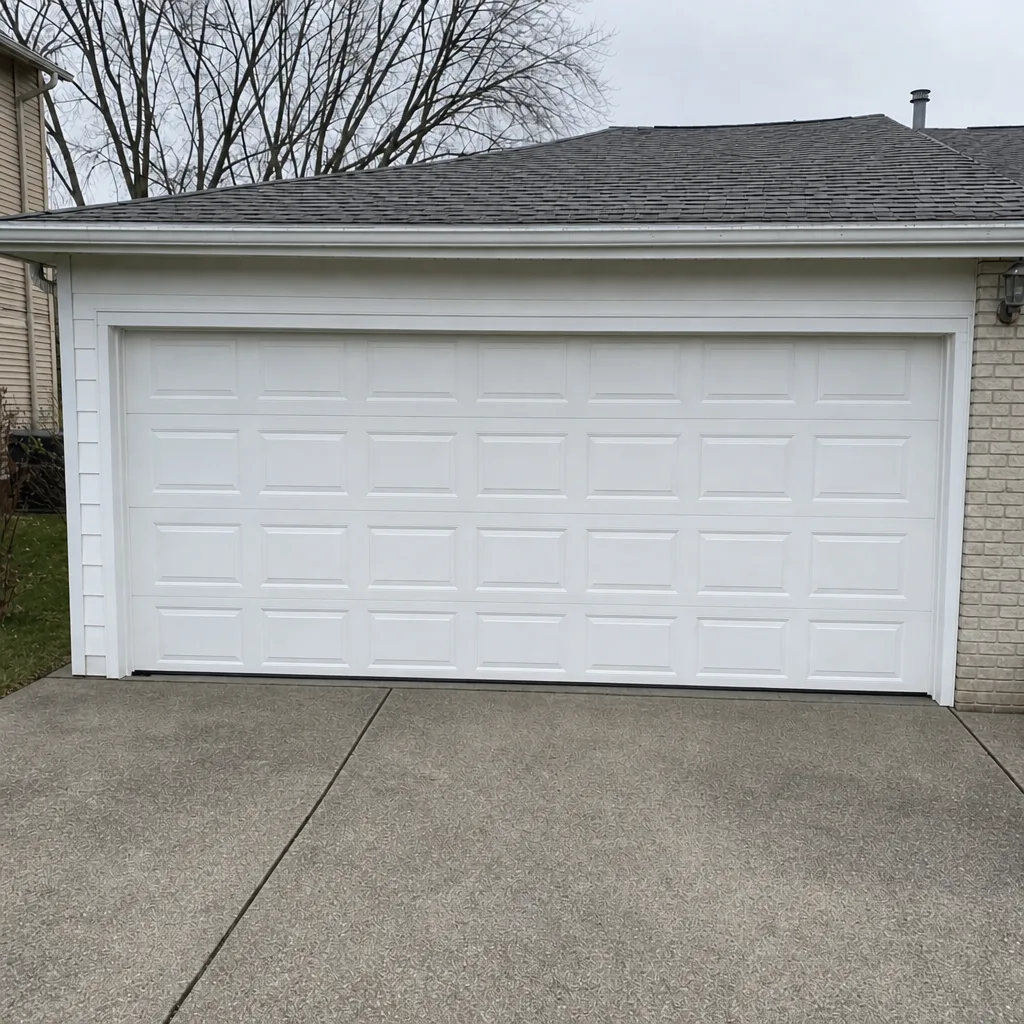 After
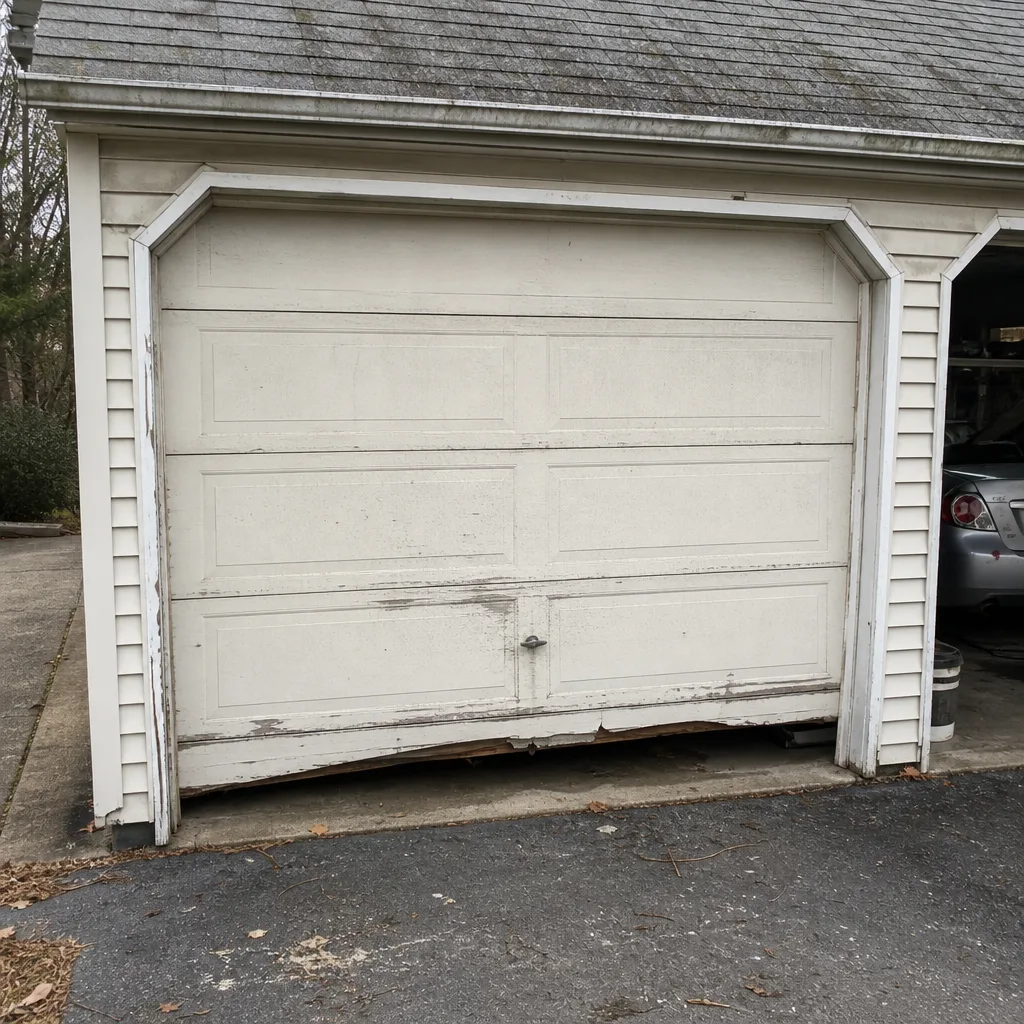 Before
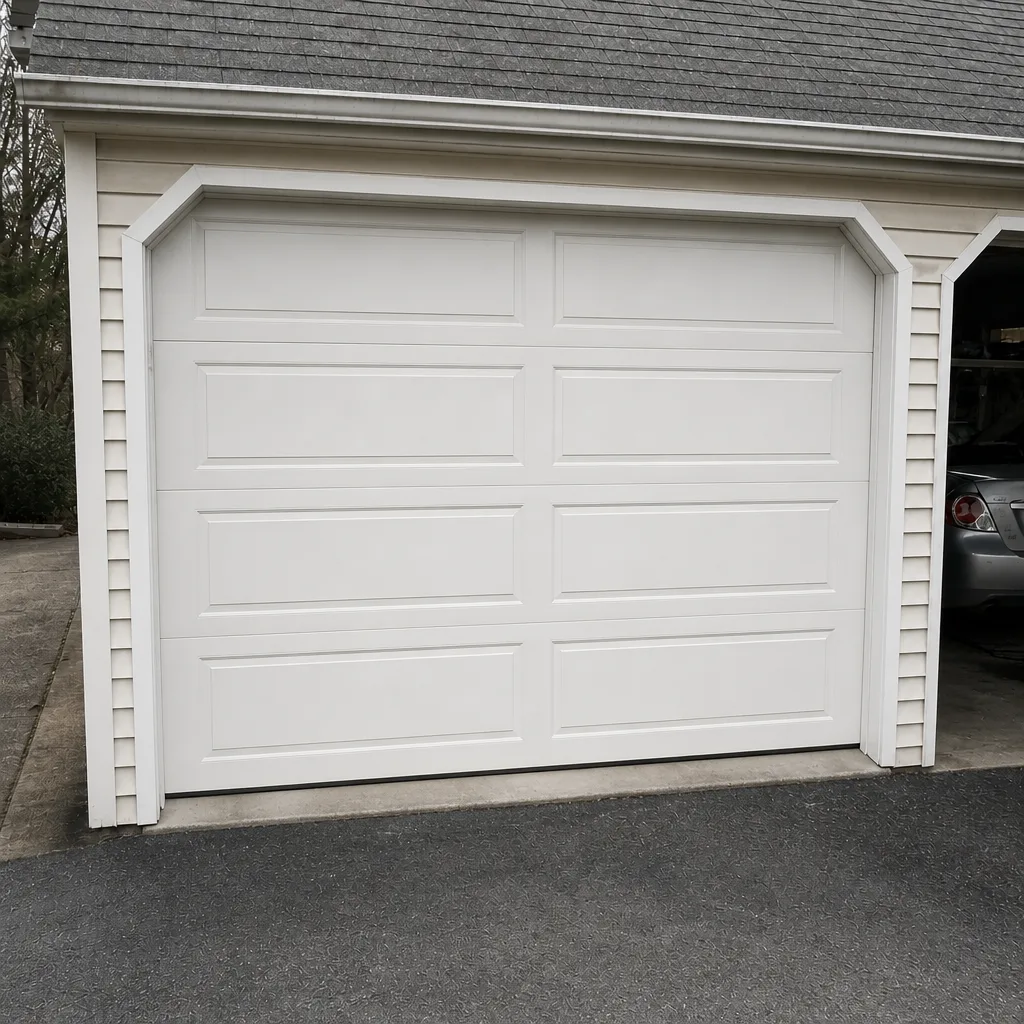 After
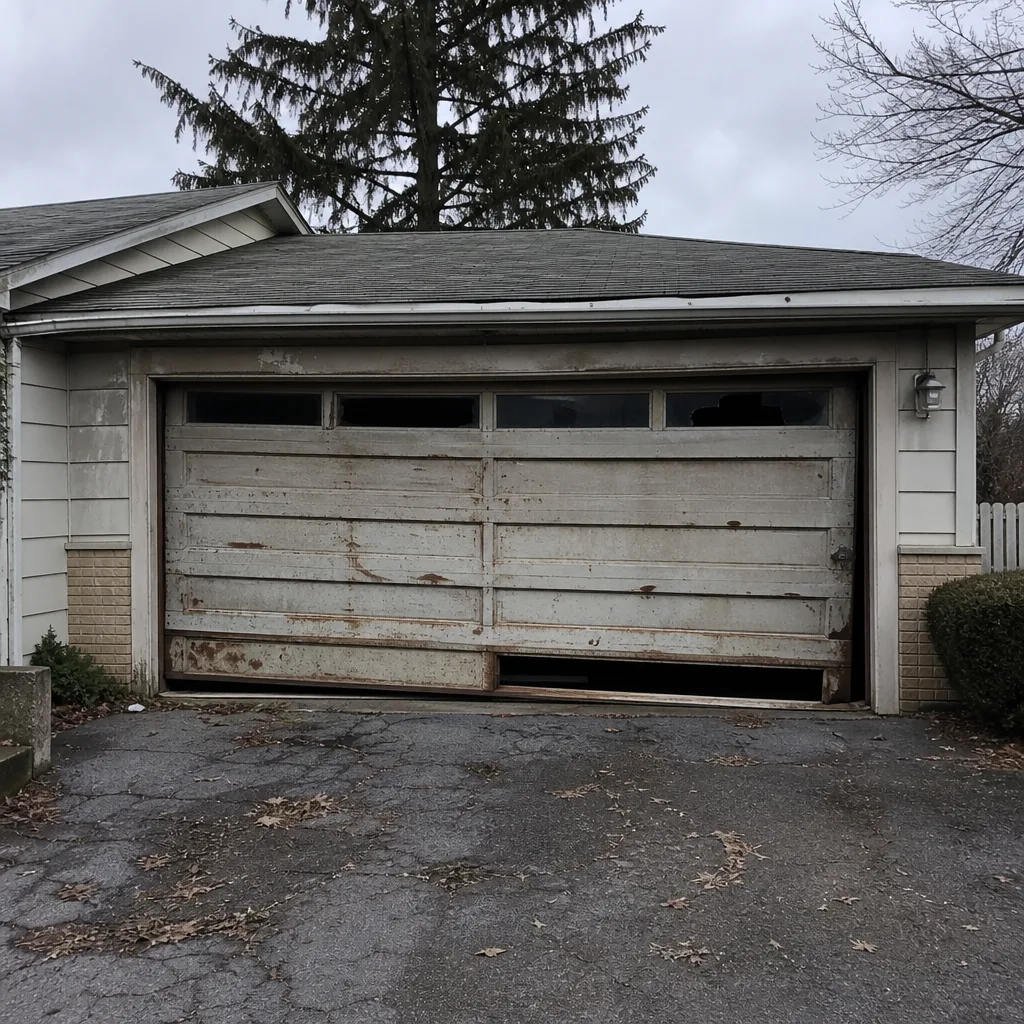 Before
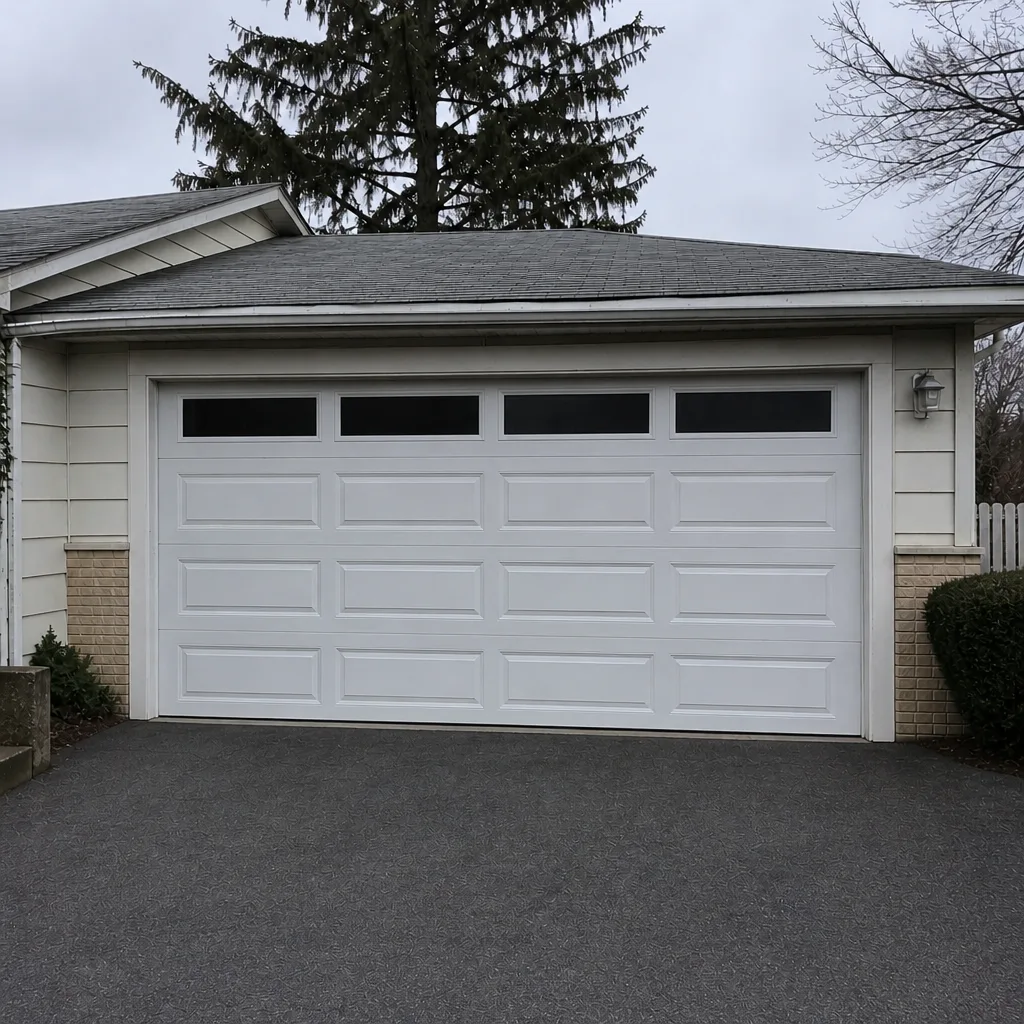 After
When to Call a Professional
Some things you fix at home. Some things you call us for. Here’s where we draw the line in Wayne: any spring noise, any door that won’t hold balance, any door that’s off track, any bend in the guides, any cable that looks slack or frayed, and any opener that runs but doesn’t move the door. Those are the calls that keep small problems from becoming expensive ones. Same for a door that reverses on its own mid-cycle, or one that closes partway and stops – both usually point to a force adjustment or a failing safety sensor, and both are quick to diagnose.
Wayne Garage Door Repair Pros offers free estimates in Wayne – call (844) 708-3348. We answer 24/7. Fast dispatch from 7am to 7pm, Sunday through Friday. The estimate is quoted and agreed before any work starts, and the written estimate sets the final price. If your door just needs an inspection before winter, that’s a good reason to call too. Catch it early and you’re looking at a small repair. Wait for the failure and you’re often looking at a much larger one. Our garage door repair page covers the full scope of what we handle.
Frequently Asked Questions
Twice a year for owner-level maintenance (lubrication, seal check, balance and auto-reverse tests) and once a year for a professional inspection. Wayne’s freeze-thaw climate means the bottom seal and balance check matter more here than in a stable climate, so do the fall check before the first freeze and the spring check after the ground thaws.
No. Lubricating the coil of a torsion spring is not a safe homeowner task. The spring is under tension calibrated to the door’s weight, and any contact with the adjustment hardware can release stored energy instantly. You can safely lubricate the torsion bar bearing plate – that’s the metal bracket at the center of the header – but leave the spring itself to a technician. Even the “lubricate the springs” line in most checklists is misleading: the right move is to leave the spring alone and have it inspected yearly.
Cold weather contracts the metal and changes the tension in the springs, and the freeze-thaw ground movement under the door shifts the bottom seal against the concrete. Doors that passed a balance test in summer may drift or fail in January. That’s not a sign the spring is bad – it’s a sign the door needs adjustment, which is why the fall balance test matters.
Yes, in most cases. Bottom seals on standard aluminum-retainer doors are inexpensive and swap out with a screwdriver, and it’s one of the more satisfying owner repairs because you can see the difference immediately. If your door has a press-fit metal retainer or a track that’s been damaged, though, have a technician do it – a bent track costs far more than the seal.
We work on LiftMaster, Chamberlain, Genie, Clopay, Amarr, Wayne Dalton, Craftsman, and Raynor – eight of the most common residential brands in Wayne. That means a proper diagnosis for the specific brand and model you have, not a guess at whichever parts happen to be on the shelf. If you’re unsure what you have, check the label on the door panel or the opener housing and we’ll match it.
Repairs are priced per job by a written estimate, so the range depends on what’s actually failed – a seal or roller is a small job, while spring replacement and track repair run higher. The estimate is free, and the written estimate is the final price. Call (844) 708-3348. We answer 24/7. Fast dispatch from 7am to 7pm, Sunday through Friday.
The Bottom Line
A garage door that works reliably isn’t a mystery. It’s a door where the six-month maintenance was actually done. The tasks that are safe for you – lubrication, balance testing, safety testing, seal inspection – prevent the majority of failures we see across Wayne. The tasks that aren’t safe – springs, cables, torsion hardware, opener internals – belong to a technician, and the mechanical reason is stored energy that doesn’t care how careful you are. Know the line, do your side of it twice a year, and get a professional inspection once a year. That’s the whole checklist. If you’re not sure which side of the line a particular issue falls on, that’s the moment to call. Call (844) 708-3348 for a free estimate. We answer 24/7. Fast dispatch from 7am to 7pm, Sunday through Friday. Learn more at Wayne Garage Door Repair Pros.
Written by the team at Wayne Garage Door Repair Pros.